Multi-agent systems, robotics and machine learning
News & milestones.
Riwa Karam · PhD Candidate at the University of California, Irvine
News
Milestones from research, conferences, and internships.
A few updates from the PhD journey, in the lab and beyond.
36Updates2021-2026Timeline
Latest Update
Upcoming: IEEE CDC 2026
Getting ready for IEEE CDC 2026 in Hawaii! After presenting at CDC for the first time in Rio de Janeiro in 2025, the next stop brings another chance to catch up with the control community, hear new ideas, and talk about robotics, learning, and multi-agent systems.
Attended the Southern California Control Workshop at UC Santa Barbara on October 23! The gathering at Loma Pelona offered another chance to connect with the regional control community and explore new ideas. Another stop in the workshop series after visits to UCLA, USC, UC San Diego, and UC Irvine.
Invited ARM RoboTalk: Collaboration in Multi-Agent Systems
Shared ideas on collaboration in multi-agent systems at an invited ARM RoboTalk in Austin, TX. The talk started with a question: what can robots achieve together that they cannot do alone? From there, it connected complementary capabilities with ecology-inspired resource sharing and graph neural networks, with a look at ongoing directions in collaborative mobility and human–swarm interaction. The slides are linked below.
The sketch-to-swarm preprint is now on arXiv! “Freehand Sketching for End-User Programming of Robot Swarms” explores how a simple drawing can guide a group of robots. The interface turns sketches into target points, robot assignments, and formations without unintended reflections. A user study looks at how people without robotics experience use the interface, and the video shows the robots bringing those drawings to life.
A new way to contribute to the graduate community at UC Irvine! Joined the Society of Graduate Electrical Engineers and Computer Scientists (GEECS) as Web Content Manager, managing and maintaining the society’s website content. A chance to put web development experience to use in support of fellow graduate students.
Brought “Learning Altruistic Collaboration in Heterogeneous Multi-Team Systems” to the 2026 GEECS Annual Technology Showcase and came away with first place in Software & Algorithms! The award included $1,000 to support conference attendance and related academic travel. The poster asks when teams should share robots with different capabilities, connecting Hamilton’s rule and graph neural networks to weigh the benefits and costs of each transfer.
Passed the PhD qualifying exam—officially a PhD candidate at UC Irvine! The presentation, “Collaboration in Multi-Agent Systems: From Assignment to Learning,” brought together results on multi-team resource allocation and learning-based approaches. It was also a chance to lay out the next research directions with the qualifying committee.
Shared a new preprint on arXiv: “Learning Altruistic Collaboration in Heterogeneous Multi-Team Systems.” The starting question is simple: when should one team give a robot to another? The answer accounts for different capabilities, team contributions, and transfer costs, using Hamilton’s rule to guide the decision. A graph neural network helps tackle the NP-hard allocation problem at larger scales, with firefighting scenarios in simulation and on physical robots to put the approach to the test.
The multi-robot collaboration survey is on arXiv! “Collaboration in Multi-Robot Systems: Taxonomy and Survey of Frameworks for Collaboration” takes a closer look at three words that often get grouped together: cooperation, coordination, and collaboration. Robot examples help explain the differences, especially when working together creates new capabilities. The survey also brings together collaboration frameworks, open challenges, and possible next directions.
Joined IEEE CSS NextCom as a General Activities Committee Member! Contributing to activities that support students, early-career researchers, and young professionals in the IEEE Control Systems Society community—a chance to help create opportunities to connect and exchange ideas beyond the lab.
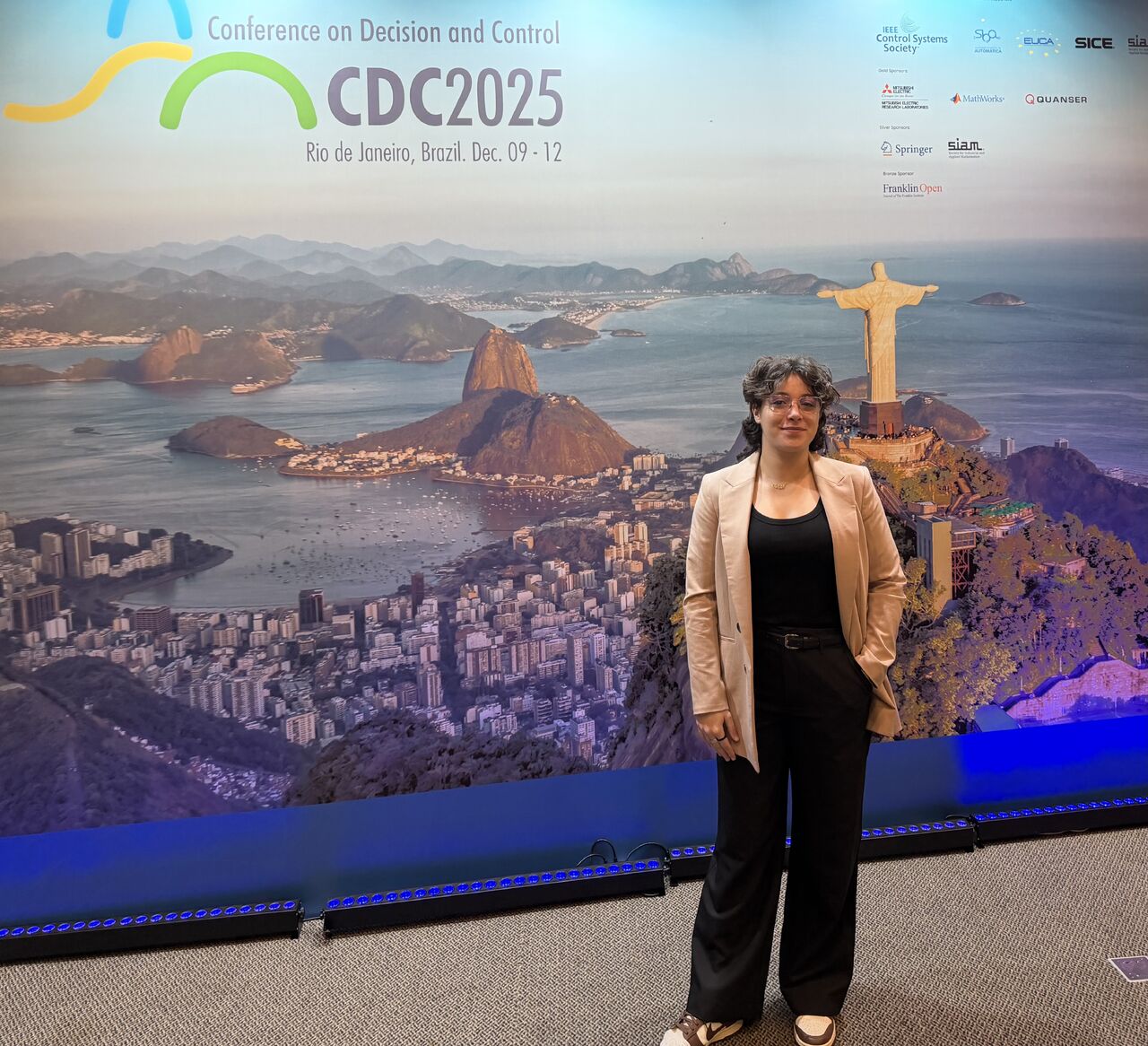
A first CDC presentation, and the first major research conference of the PhD! Traveled to Rio de Janeiro, Brazil, for the 64th IEEE Conference on Decision and Control to present the first-author paper “Resource Allocation for Multi-Team Collaboration Based on Hamilton’s Rule.” The paper connects an ecological model of altruism with sharing resources across robot teams. A few conference photos, the slides, and a presentation recording are below.
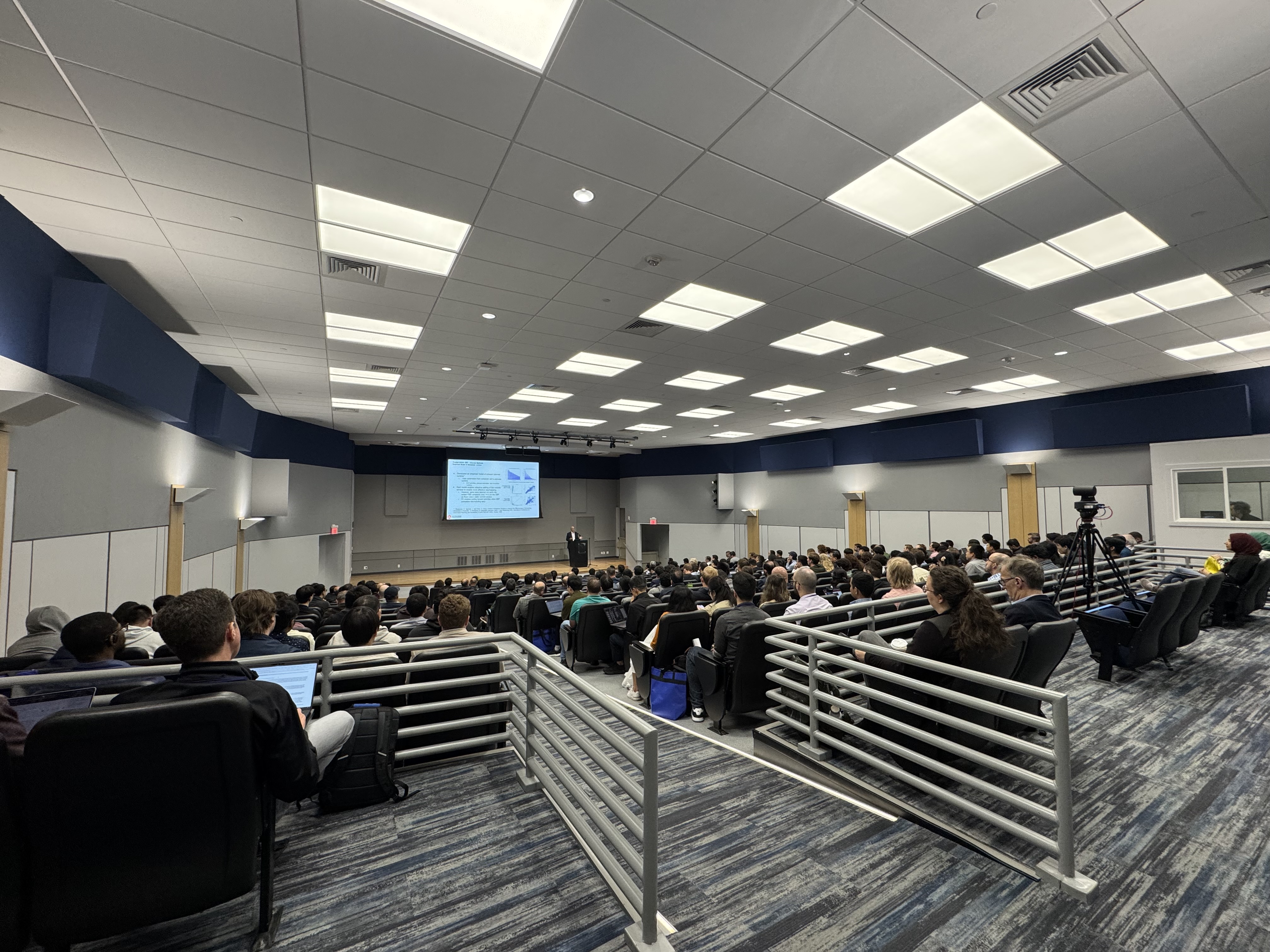
This time, the Southern California Control Workshop came to UC Irvine! Attended the 46th edition after earlier visits to UCLA and USC and a presentation at UC San Diego. Another opportunity to stay connected with the regional control community, now on home campus.
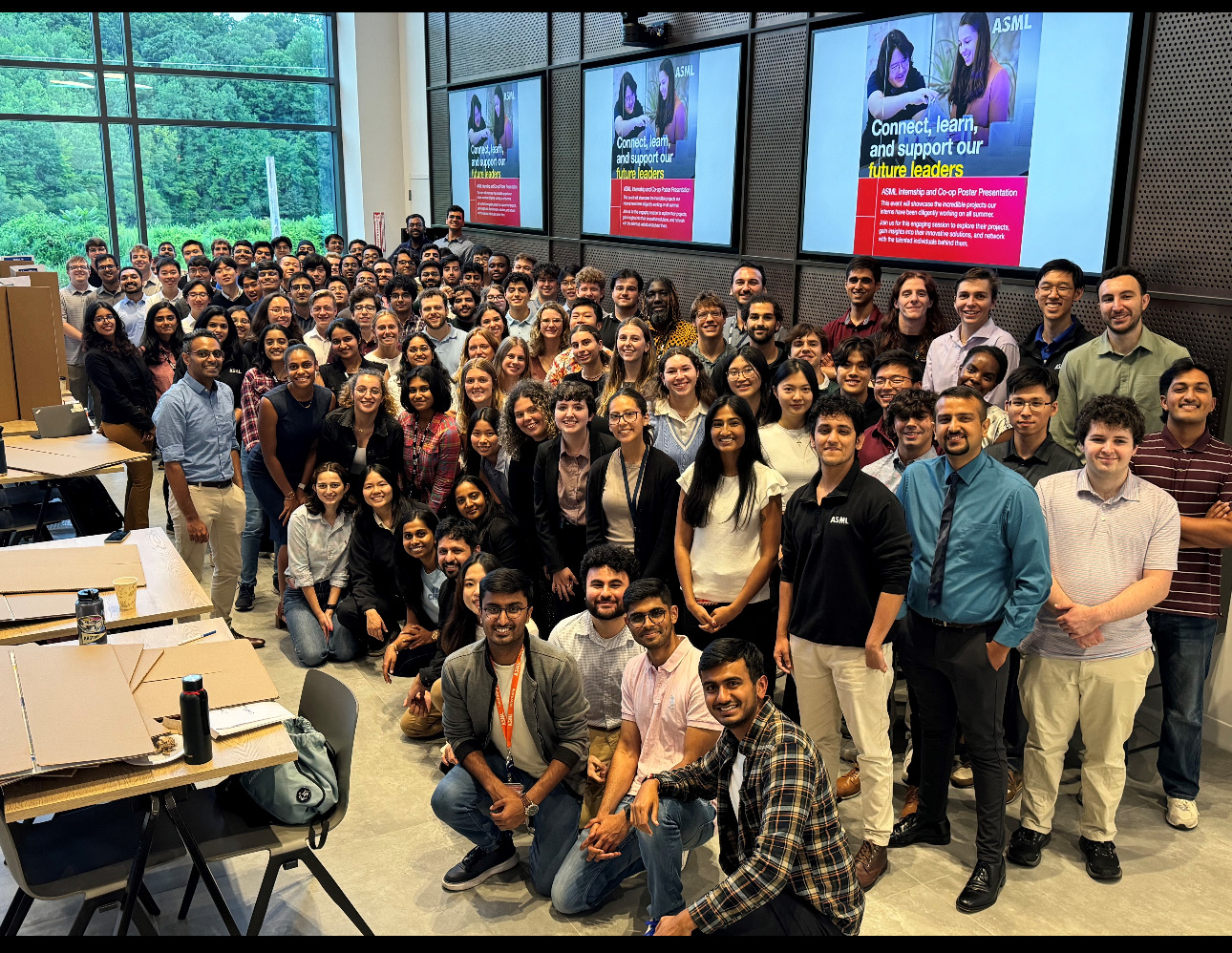
Wrapped up a second summer at ASML in Wilton, Connecticut, as a Mechatronics Research Engineer Intern. The summer focused on Bayesian hierarchical models for machine health: tracking drift and performance changes, understanding uncertainty, and looking for root causes. Then it was back to campus and PhD research, after a summer of connecting statistical models with practical engineering questions.
First paper accepted at IEEE CDC! “Resource Allocation for Multi-Team Collaboration Based on Hamilton’s Rule” was accepted as a regular paper at CDC 2025. This first-author paper brings an ecological view of altruism into decisions about sharing robots across teams. Next stop: presenting it in Rio de Janeiro.
Back at ASML in Wilton, Connecticut, for a second summer, this time as a Mechatronics Research Engineer Intern. The focus shifted to machine health monitoring and Bayesian hierarchical modeling—looking at uncertainty and root causes as machines change over their lifetimes.
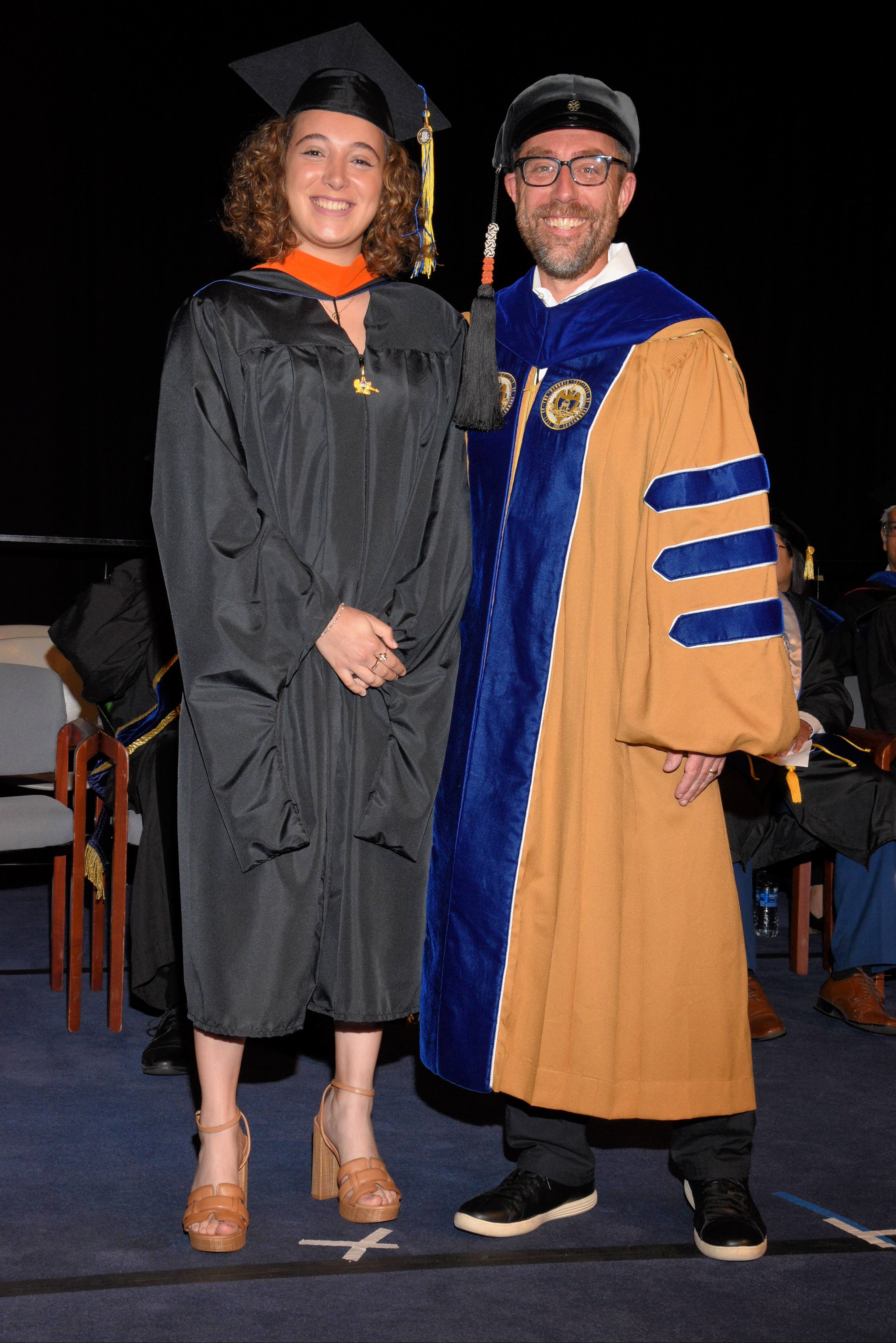
Graduation day at UC Irvine! Celebrated earning an M.S. in Electrical and Computer Engineering, with the thesis “A Graphical Interface for Specifying and Establishing Multi-Robot Formations.” The thesis brought together human–swarm interaction, computer vision, and formation control around one idea: turning drawings into robot formations.
Shared the master’s thesis poster at the 2025 GEECS Annual Technology Showcase. It follows a drawing all the way to a robot formation: processing the image, picking target points, assigning robots, and guiding their motion. Simulation examples and Robotarium experiments show the shapes taking form without unintended flips.
Spent CPS-IoT Week 2025 at UC Irvine helping behind the scenes as a student volunteer. From registration and poster sessions to attendee logistics and event operations, the week offered a different view of what goes into bringing a research conference together.
Joined labmates Dr. Alexander A. Nguyen and Dr. Efrain Mendez Flores for an LA Times interview about the UCI Robot Ecology Lab. The article shares a look at the lab’s nature-inspired robotics with a wider audience. You can read it at the link below.
Research Presentation at the 45th Control Workshop
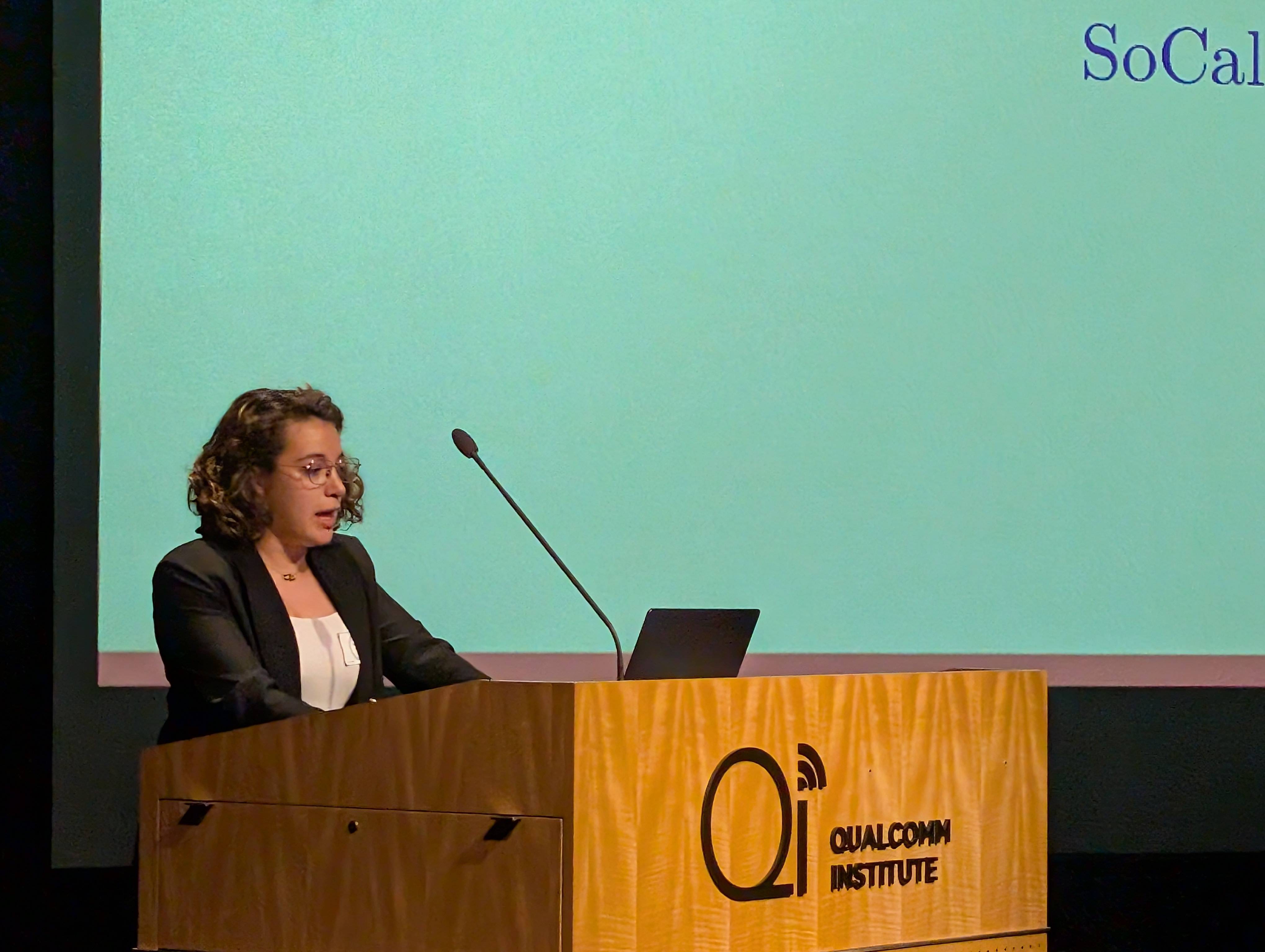
Took “Resource Allocation with Multi-Team Collaboration Based on Hamilton’s Rule” to the 45th Southern California Control Workshop at UC San Diego. The presentation explored how an idea from ecology can help robot teams share resources when tasks are spread across different regions. A few photos from the day and the slides are below.
Visited USC for the 44th Southern California Control Workshop, the second visit to the series after UCLA earlier in the year. Another chance to get to know the Southern California control community alongside graduate research at UC Irvine.
Wrapped up the first ASML internship in mechatronics and control systems. Highlights included Gaussian process models for piezoelectric actuator force prediction and automating MATLAB/Python tests, bringing a 40-hour workflow down to an overnight run. Then it was back to the Robot Ecology Lab to continue graduate research.
Shared progress at ASML’s intern poster session during the first summer internship. The summer focused on data-driven models for mechatronic systems, including Gaussian process regression for actuator force prediction and plenty of analysis in Python and MATLAB.
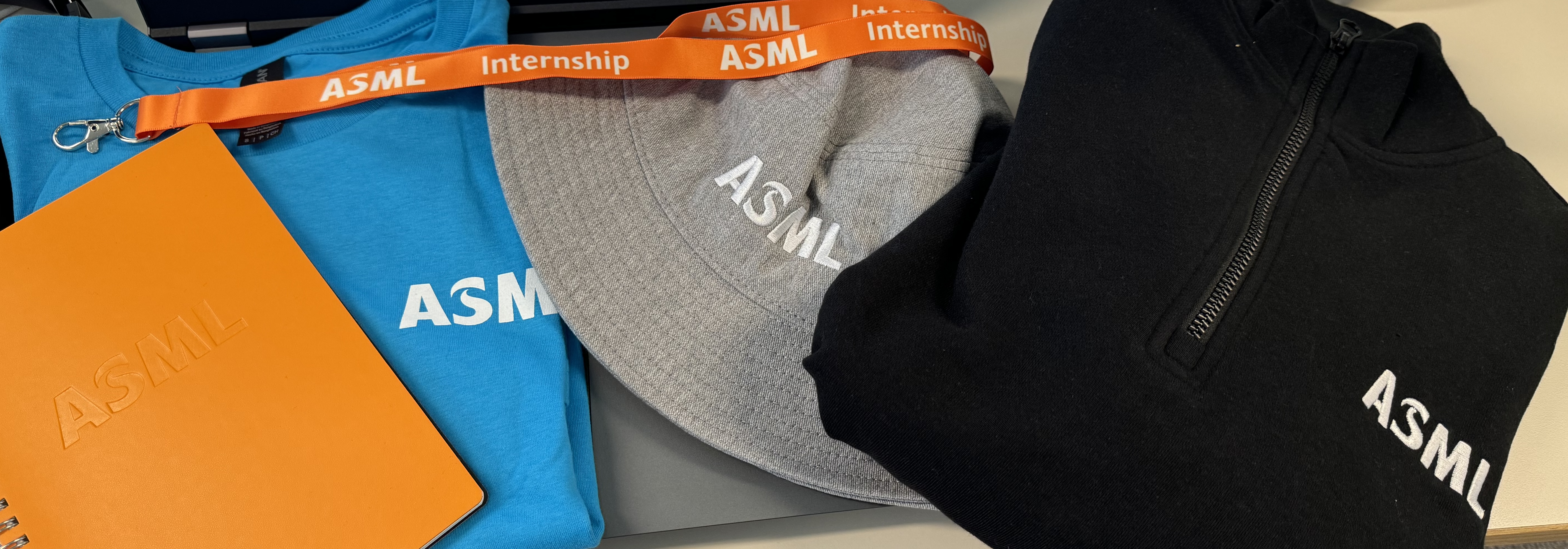
Started the first summer internship at ASML in Wilton, Connecticut, as a Mechatronics and Control Systems Engineer Intern. A chance to bring modeling, machine learning, and software skills into high-precision mechatronic systems—and get hands-on with engineering questions beyond campus.
First visit to the Southern California Control Workshop! Attended the 43rd edition at UCLA, getting an introduction to the regional control community and connections with robotics, optimization, and multi-agent systems.
Passed the PhD preliminary exam after meeting the coursework and grade requirements. One of the early steps in the PhD at UC Irvine, with the qualifying exam and candidacy still ahead.
Started graduate studies at UC Irvine with M.S. and PhD orientations. A new chapter after computer engineering at the University of Balamand: electrical and computer engineering, with robotics and multi-agent systems at the center.
Joined the ZAKA AI Bootcamp after winning admission through the IEEE Grand Tech challenge in June. A chance to build on that win and explore machine learning, computer vision, and natural language processing!
Received the Faculty Award for Academic Excellence from the University of Balamand’s Faculty of Engineering. A special way to close out undergraduate studies, alongside graduating as valedictorian.
Graduated from the University of Balamand with a B.S. in Computer Engineering as valedictorian! The degree brought together embedded systems, computer architecture, and software development, finishing with a graduation project in virtual reality.
IEEE Grand Tech Challenge Win & ZAKA AI Bootcamp Admission
Won the challenge at IEEE Grand Tech 2023 and earned admission to the ZAKA AI Bootcamp as the prize! A day exploring virtual reality and the metaverse with the IEEE Computer Society opened the door to a deeper dive into AI.
Presented “Gamification of Virtual Reality Kitchen Scenarios” with teammate Fady Gebran as the B.S. graduation project. A chance to bring computer engineering into an interactive virtual environment and share the final project at the close of undergraduate studies.
Acceptance to UC Irvine
An acceptance letter from UC Irvine marked the start of the next chapter! With undergraduate studies at the University of Balamand coming to a close, the path ahead led to M.S. and PhD studies beginning that September.
Continuing at AviaPro as a Part-Time Software Developer
The summer co-op grew into a part-time role! Continued remotely with AviaPro Consulting through July 2023, alongside undergraduate studies at the University of Balamand. The software development role spanned team projects and an independently developed full-stack application, with Git, CI/CD, and infrastructure as code supporting the development workflow.
Starting a Summer Internship at AviaPro
Joined AviaPro Consulting as a Software Developer for a summer co-op running from June through August 2022. A chance to put computer engineering into practice through web development, using React and Node.js to help turn Excel-based repositories into connected databases and internal tools. The hybrid role marked the beginning of a longer chapter with the team.
First Prize: Lebanon IoT & AI Challenge
Celebrated a team win at the Lebanon IoT & AI Challenge, placing first among 12 teams! An early milestone during computer engineering studies at the University of Balamand, and a chance to bring ideas in AI and connected technology into a team challenge.